
Regular draining of radiators is crucial to remove accumulated sludge, rust, and debris. This buildup can impede heat transfer, leading to inefficient heating and potential damage to the heating system. Draining also provides an opportunity to inspect and address any issues with the radiator or the heating system.
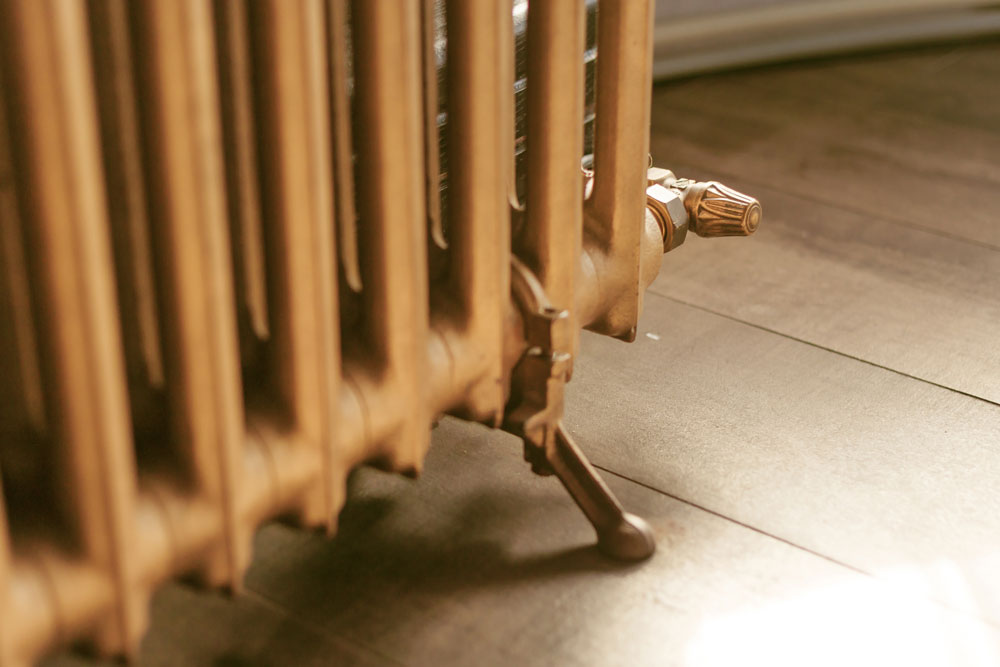
While draining involves removing water from the radiator to clear out debris, balancing and bleeding focus on optimising the radiator’s performance. Balancing ensures even heat distribution, adjusting the flow of hot water. Bleeding, on the other hand, releases trapped air to maintain efficient heating. Each process serves a distinct purpose in maintaining a well-functioning heating system.
7 Steps to Draining Your Cast Iron Radiator
To successfully drain your cast iron radiator, follow these step-by-step instructions. This will not only enhance the heat transfer of your radiator but give you the opportunity to fully inspect your radiator for any potential issues.
- Turn Off the Heating System
Begin by turning off the heating system and allowing the radiator to cool.
- Locate the Drain Valve
Find the drain valve at the bottom of the radiator. This is typically a small brass or plastic valve.
- Place a Container
Position a container or tray beneath the valve to catch the water during the draining process.
- Open the Drain Valve
Use a wrench or the appropriate tool to open the drain valve. Allow the water to flow out until the radiator is empty.
- Close the Drain Valve
Once the radiator is drained, close the drain valve securely.
- Inspect and Check for Leaks
Take the opportunity to inspect the drain valve for any signs of damage or leaks. Address any issues promptly.
- Repressurize the System
If necessary, repressurise the heating system according to the manufacturer’s instructions.
How often should you drain your cast iron radiator?
Draining a radiator should be done annually as part of routine maintenance. This helps prevent the buildup of sludge and debris in the system, ensuring efficient heat transfer and prolonging the radiator’s lifespan.